
San Antonio Telemedicine Doctors for Integrative Functional Medicine
Direct Integrative Care, led by Yoon Hang Kim, MD, MPH, provides integrative functional medicine via telemedicine to clients in San Antonio and across Texas. This guide explains how to evaluate, verify, and engage with telehealth providers for complex health conditions. It covers credential checks, cost structures, and the specific clinical workflow of root-cause medicine.
How to Choose a Provider
Training and Certification
Look for providers with specific designations. The IFM Scholar designation indicates a level of mastery in functional medicine principles. Additionally, board certification in Preventive Medicine provides a rigorous foundation in risk assessment and long-term health management. At Direct Integrative Care, Dr. Kim holds both an IFM Scholar designation and board certification in Preventive Medicine, ensuring a high standard of clinical rigor.
Scope of Practice
Verify the scope of the practice. Some clinics focus on wellness and lifestyle coaching, while others manage complex medical conditions like autoimmune disease or chronic pain. If you have a diagnosed condition, you need a provider who can interpret advanced lab work and adjust therapies based on clinical evidence, not just general advice. For additional details, review the .
Questions to Ask Before Committing
Before signing a membership agreement, ask specific questions to gauge the provider's approach. These questions help you understand the level of attention you will receive. For additional details, review the Customer Experience.
- What is your approach to root-cause analysis? Ask how they determine the underlying drivers of your symptoms. Do they use comprehensive lab panels or rely on symptom checklists? For additional details, review the Frequently Asked Questions.
- How do you handle complex conditions? If you have fibromyalgia, mast cell activation syndrome, or mold-related illness, ask for their specific protocol for these conditions.
- What is the communication model? How often will you meet? Can you reach them between visits? In a telemedicine-only model, clarity on communication channels is essential.
Verifying Credentials and Claims
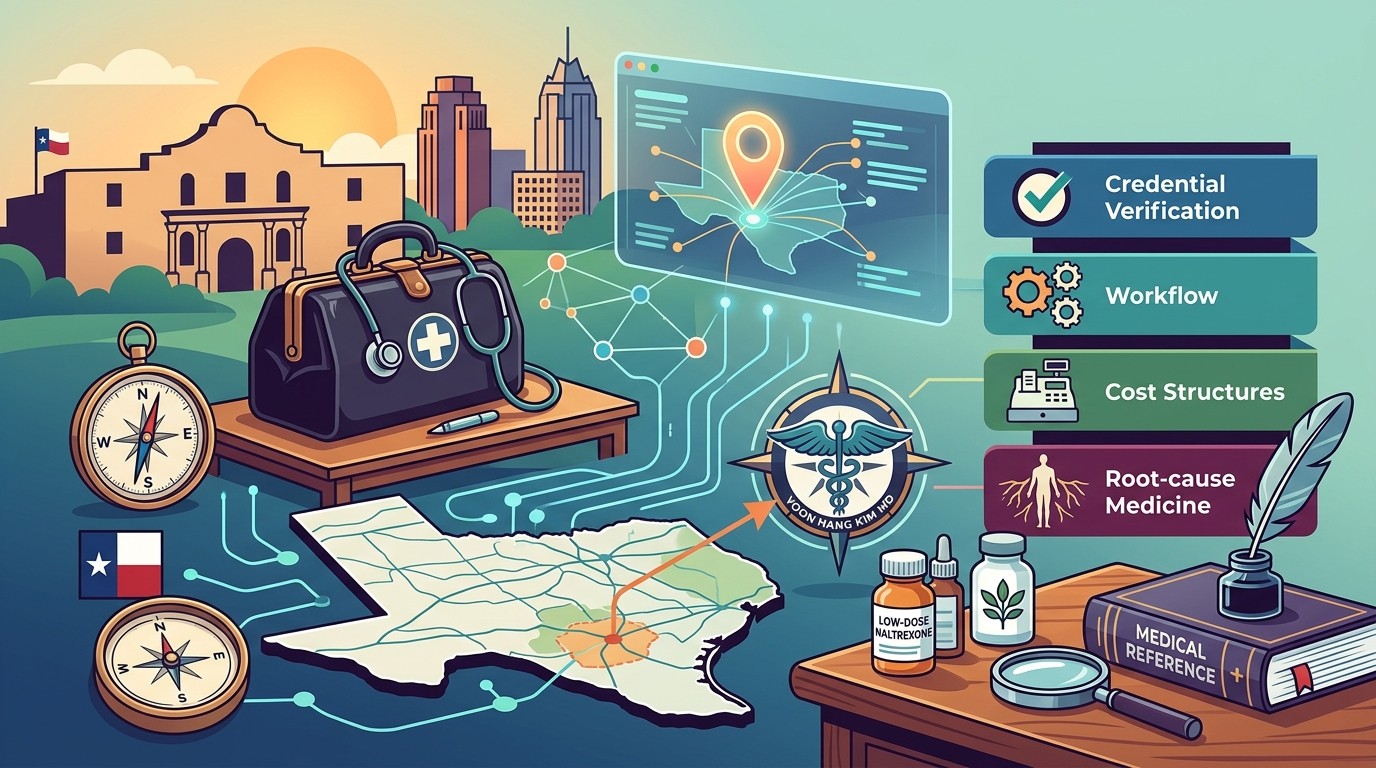
Medical credentials can be verified through public databases. Do not rely solely on the provider's website. Check the state medical board for active licenses and any disciplinary actions. For functional medicine, verify the IFM certification through the Institute for Functional Medicine. This step ensures that the provider's claims of expertise are backed by verifiable training.
License Verification
Since telemedicine crosses state lines, verify that the provider is licensed in your state. For Texas residents, check the Texas Medical Board. For out-of-state residents, check the respective state boards. This is a critical step for telehealth compliance.
The Clinical Workflow
Understanding the workflow helps set realistic expectations. The process typically begins with an intake phase, followed by diagnostic testing, and then therapeutic intervention.
Intake and History
Diagnostic Testing
Therapeutic Intervention
Understanding Membership Costs
Factors Influencing Cost
Costs can vary based on the frequency of visits and the types of labs ordered. Lab work is often billed separately or included in specific tiers. It is important to understand what is included in the membership fee versus what is an additional cost.
Common Mistakes to Avoid
Patients often make mistakes that delay their progress. One common error is expecting quick fixes. Functional medicine is a process that takes time. Another mistake is not following through on lifestyle changes. The provider can prescribe the right therapy, but the patient must implement the changes.
Communication Gaps
Failure to communicate side effects or lack of progress can stall treatment. In a telemedicine model, you are responsible for reporting changes between visits. Keep a symptom journal to track your progress and share it with your provider.
Telemedicine vs. In-Person Care
| Physical Exam | No | Yes |
| Procedures | No | Yes |
| Convenience | High | Lower |
| Access to Specialists | High | Variable |
| Cost Structure | Membership | Insurance/Fee-for-Service |
Addressing Specific Health Situations
Different conditions require different approaches. For autoimmune disease, the focus is often on reducing inflammation and modulating the immune system. For chronic pain, the approach may involve addressing central sensitization and using medications like LDN. For mold-related illness, the priority is exposure removal and supporting detoxification pathways. Each of these conditions requires a provider with specific experience in that area.
Low-Dose Naltrexone (LDN)
LDN is a prescription medication used off-label for various conditions. It requires careful titration and monitoring. Not all providers are comfortable prescribing LDN. Ensure your provider has experience with this specific therapy.
Regulatory Rules and Patient Protections
Telemedicine is regulated by state medical boards. Providers must be licensed in the state where the patient is located at the time of the visit. This rule protects patients by ensuring that the provider is accountable to the local medical board. Additionally, telehealth platforms must comply with HIPAA regulations to protect patient privacy.
Scope of Practice
Providers must practice within their scope of license. A physician cannot perform procedures that require a physical presence. Understanding these rules helps you set realistic expectations for what a telemedicine provider can and cannot do.
Local Specifics for San Antonio
San Antonio has a growing number of integrative medicine providers. However, the availability of specific services varies. Some providers focus on wellness, while others manage complex medical conditions. Direct Integrative Care serves clients in San Antonio and across Texas via telemedicine. This allows residents to access specialized care without traveling to major metropolitan areas.
Geographic Considerations
Telemedicine removes geographic barriers. You can see a specialist in another state if they are licensed in Texas. This expands your options beyond the local market. However, you must still verify the provider's license in Texas.
Timing Your Care
Starting functional medicine early can prevent disease progression. If you have been struggling with symptoms for years, starting now is better than waiting. The timeline for seeing results varies. Some patients notice improvements in energy within weeks, while others may take months to see significant changes in chronic conditions. Patience is key.
When to Act
Act when you feel that your current care is not addressing the root cause of your symptoms. If you are tired of managing symptoms without understanding why they occur, it is time to seek a functional medicine approach.
Long-Term Outcomes
Measuring Progress
Use objective measures where possible. Lab work, sleep tracking, and symptom journals are all useful tools. Share these with your provider to guide treatment adjustments.
Key Takeaways
- Verify provider credentials through state medical boards and IFM certification.
- Understand the difference between wellness coaching and medical management.
- Telemedicine-only practices cannot perform physical exams or procedures.
- Complex conditions like autoimmune disease require specific provider experience.
- Communication is critical in a telemedicine model.
- Patience is required for long-term functional medicine outcomes.
- Always verify that the provider is licensed in your state.
Frequently Asked Questions
Is functional medicine covered by insurance?
Direct Integrative Care operates on a membership model and does not bill insurance. This allows for more personalized care without insurance constraints.
Can I see a telemedicine doctor if I live in San Antonio?
Yes, provided the doctor is licensed in Texas. Direct Integrative Care serves clients in San Antonio and across Texas via telemedicine.
What is low-dose naltrexone (LDN)?
LDN is a prescription medication used off-label for conditions like fibromyalgia and autoimmune disease. It requires careful monitoring by a qualified provider.
How long does it take to see results?
Results vary by individual and condition. Some patients see improvements in weeks, while others may take months. Consistency and communication with your provider are key.
Can a telemedicine doctor prescribe medication?
Yes, if they are licensed in your state. They can prescribe medications that can be filled at a local pharmacy.
What is the IFM Scholar designation?
The IFM Scholar designation indicates a high level of mastery in functional medicine principles, as certified by the Institute for Functional Medicine.
Do I need to be in the same state as the doctor?
You must be physically located in a state where the doctor holds an active medical license at the time of the consultation.