

Root-Cause Analysis for Complex Digestive Conditions
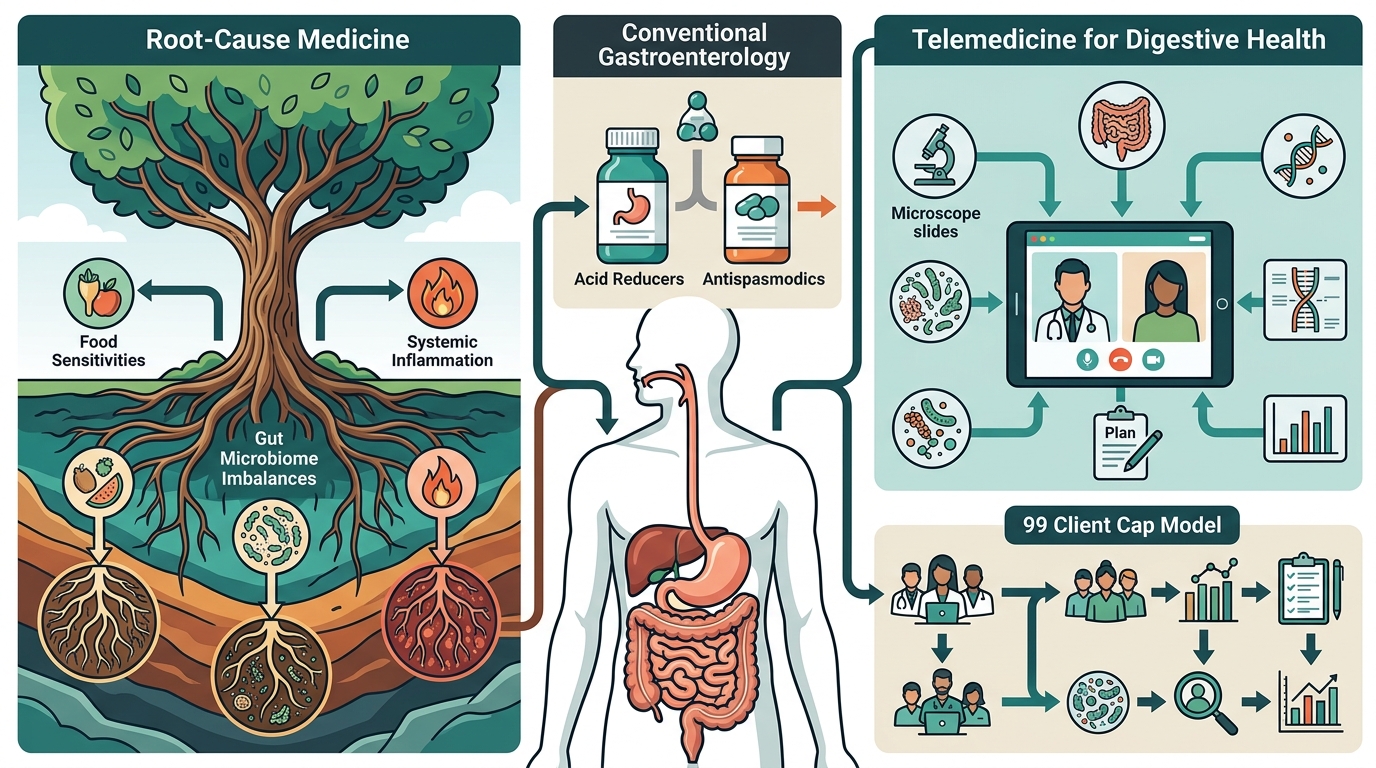
Conventional gastroenterology often focuses on symptom management, such as prescribing acid reducers for heartburn or antispasmodics for pain. Functional medicine takes a different path by asking why the symptoms are occurring. Root-cause medicine is a clinical approach that identifies and addresses the underlying drivers of disease rather than just treating the visible signs. For digestive health, this might involve investigating food sensitivities, gut microbiome imbalances, or systemic inflammation that contributes to conditions like irritable bowel syndrome (IBS) or inflammatory bowel disease (IBD). For additional details, review the Customer Experience.
Dr. Kim brings over twenty years of experience and an Osher/Weil fellowship to this work. The practice is deliberately small, capped at 99 active clients. This cap ensures that each member receives the time and continuity necessary for a deep clinical investigation. In a volume-driven clinic, a fifteen-minute visit is often the norm. In a membership-based model, the focus shifts to the longitudinal relationship between the clinician and the patient, which is critical for complex digestive cases that evolve over time. For additional details, review the Frequently Asked Questions.
Telemedicine Access Across Five States
One of the primary barriers to specialized digestive care is geographic availability. Many patients in rural or suburban areas of the served states may have limited access to functional medicine practitioners. Telemedicine removes this barrier. Direct Integrative Care provides secure video and telephone consultations to members in Texas, Illinois, Missouri, Georgia, and Florida. This allows a patient in Quincy, Illinois, or Fredericksburg, Texas, to access the same level of specialized guidance as someone in a major metropolitan area.
The practice operates on a transparent monthly membership fee. This structure removes the pressure of insurance coding, which can sometimes limit the types of tests a doctor can order or the amount of time they can spend with a patient. By operating outside the insurance reimbursement system, the clinical decisions are guided by the patient's actual needs. This is particularly relevant for digestive health, where comprehensive testing panels are often required to map the gut environment accurately.
Integrative Approaches to Gut Health
The practice also addresses conditions that are often poorly served by conventional care, such as mast cell activation syndrome (MCAS) and mold-related illness, which can have significant gastrointestinal manifestations. By treating the whole person, the practice aims to improve not just gut symptoms but overall quality of life. This holistic view is essential for patients who have been to multiple specialists without finding lasting relief.
Membership Model and Clinical Continuity
Key Takeaways
- Functional medicine telemedicine provides access to root-cause digestive care in Texas, Illinois, Missouri, Georgia, and Florida.
- The membership model at Direct Integrative Care removes insurance coding constraints, allowing for deeper clinical focus.
- Dr. Kim's background in preventive medicine and integrative medicine ensures an evidence-anchored approach to gut health.
- Telemedicine eliminates geographic barriers, making specialized care accessible to patients in both urban and rural areas.
- The practice is capped at 99 clients to ensure high-quality, continuous care for each member.
Frequently Asked Questions
What states does Direct Integrative Care serve for digestive health?
The practice serves patients in Texas, Illinois, Missouri, Georgia, and Florida via telemedicine. You must be physically located in one of these states at the time of each consultation.
Is functional medicine covered by insurance?
Direct Integrative Care operates on a membership-based model and is not billed to insurance. This allows for transparent pricing and clinical decisions based on patient needs rather than reimbursement rules.
What is the difference between functional medicine and conventional gastroenterology?
Conventional gastroenterology often focuses on symptom management and structural issues. Functional medicine focuses on root-cause analysis, looking at systemic factors like microbiome health, inflammation, and food sensitivities that drive digestive symptoms.
How many patients does the practice see?
The practice is deliberately small, with a cap of 99 active clients. This ensures that each member receives the time and continuity necessary for complex care.
Does the practice perform physical examinations?
No, all membership services are provided via secure video or telephone consultation. No physical examinations, procedures, or hands-on treatments are performed as part of the telemedicine membership.